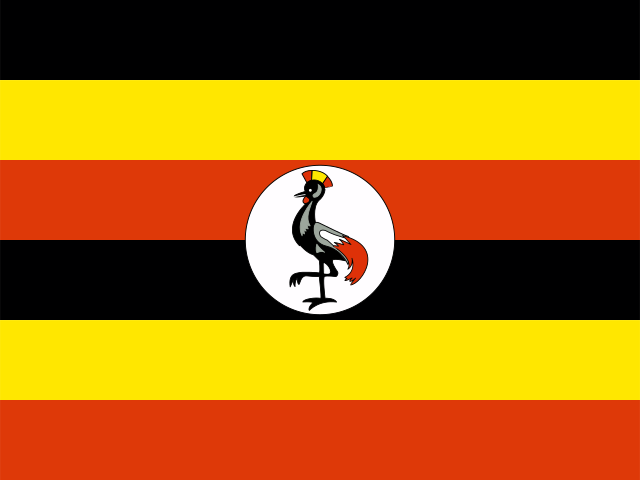
 Uganda
 visa guide: visits, work, study, residence and asylum
- 11 visa types
- checked 24 October 2026
How visas for Uganda work
Uganda's visas, passes and permits are issued by National Citizenship and Immigration Control (NCIC), the immigration directorate of the Ministry of Internal Affairs, under the Uganda Citizenship and Immigration Control Act and its regulations. Almost every application, from a USD 50 tourist visa to a three-year work permit, is filed on the official online portal at visas.immigration.go.ug: you upload scanned documents, pay by Visa or MasterCard (a 3% online surcharge is added), receive an approval letter by email and complete the process with biometric capture at the port of entry or an immigration office.
Nationals of about forty countries with visa abolition agreements, including Kenya, Rwanda, Tanzania, Ireland, Malaysia and Singapore, do not need a visa. Everyone else must obtain a visa before travelling, and the Ugandan embassy website we checked refers visa applicants to the same online portal rather than taking paper applications.
Short visits use the single-entry visa (up to 3 months, USD 50), the multiple-entry visa (6, 12 or 24 months), the 7-day transit visa or the East African Tourist Visa (USD 100, 90 days across Uganda, Kenya and Rwanda). Longer stays require a pass or an entry permit: the student pass, the dependant pass, the special pass for short assignments, entry permits in classes A to H for employment, investment and people with foreign income, and the certificate of residence for long-term residents. Asylum is handled separately by the Office of the Prime Minister under the Refugees Act 2006.
Two recent official changes matter to travellers: on 2 October 2026 NCIC announced that a yellow fever vaccination certificate is no longer mandatory for entry, although some older service pages still list it; and an approval letter is valid for 90 days from approval, so you should apply close to your travel date and travel within that window.
Which visa do I need?
Holiday, safari, family visit or medical treatment of up to 3 months: single-entry visa (USD 50), applied for online.
Touring Uganda, Kenya and Rwanda on one trip: East African Tourist Visa (USD 100, 90 days, first entry in the issuing country).
Meetings and conferences: single-entry visa in the business category; frequent visitors: multiple-entry visa; a short paid contract: special pass (USD 400 for 3 months).
Passing through Uganda to another country: transit visa (USD 50, maximum 7 days).
Studying at a Ugandan school or university: enter on a visa in the studies category, then get a student pass (USD 100).
Employment by a Ugandan organisation: entry permit class G1, G2 or G3; investing as a company shareholder: classes B to F.
Living in Uganda on foreign income without working: entry permit class H (assured income of at least USD 36,000 a year).
Joining a foreign resident or a Ugandan citizen as spouse or child: dependant pass; long-term settlement: certificate of residence; protection: asylum through the Office of the Prime Minister.
Visa types for Uganda
Visits and short stays
- Tourist visa Uganda tourist visa (single entry) and East African Tourist Visa
Visitors who need a visa for a holiday, safari, family visit or medical treatment in Uganda apply online for the single-entry tourist visa, which costs USD 50 and can be granted for up to 3 months.
Maximum stay: Single-entry visa: up to 3 months; East African Tourist Visa: 90 days in Uganda, Kenya and Rwanda - Transit visa Uganda transit visa (maximum 7 days)
Travellers who pass through Uganda on their way to another country can apply online for a transit visa.
Maximum stay: 7 days
Business and self-employment
- Business visa Single-entry visa for business, multiple-entry visa and special pass
Uganda has no separate business visa: business travellers use the single-entry visa (USD 50) in its business category for meetings and conferences, or the multiple-entry visa for 6, 12 or 24 months if they come often.
Maximum stay: Single entry: up to 3 months; special pass: 3 months - Investor visa Entry permit classes B, C, D, E and F (company shareholders and professionals)
Foreigners who own shares in a Ugandan company and want to live in Uganda to run it apply for an entry permit in the class that matches the business: B for agriculture and agro-processing, C for mining, D for general trade, E for manufacturing and F for members of listed professions.
Maximum stay: 6, 12, 24 or 36 months
Study and training
- Student visa Student pass (with entry on a visa in the studies category)
Foreign students in Uganda need a student pass, which NCIC grants to learners over 4 years old enrolled at a Ugandan institution, for 3, 6 or 12 months.
Maximum stay: Student pass for 3, 6 or 12 months, renewable through the portal
Work
- Work visa Work permit: entry permit classes G1, G2 and G3 (employment)
To work for an employer in Uganda a foreign national needs an entry permit, commonly called a work permit, which allows the holder to live and work in the country and is always sponsored by an organisation registered with NCIC.
Maximum stay: 6, 12, 24 or 36 months, as granted
Family
- Family reunification visa Dependant pass (spouse, children and other relatives)
Family members who live in Uganda with a foreign resident, or with a Ugandan citizen, need a dependant pass.
Residence
- Retirement visa Entry permit Class H (ordinary resident with assured foreign income)
Uganda has no visa labelled for retirees, but its class H entry permit serves the same purpose: NCIC issues it to ordinary residents who have an assured income from sources outside Uganda and undertake not to take any employment.
Maximum stay: 6, 12, 24 or 36 months - Permanent residence Certificate of residence (long stay, marriage to a Ugandan, former Ugandans)
Uganda's long-term status for foreigners is the certificate of residence, issued in three cases: to people who have lived in Uganda continuously for 10 years and contributed to its socio-economic development, to spouses legally married to a Ugandan for at least 3 years and living legally in the country, and to former Ugandan citizens who acquired another nationality.
Maximum stay: 5 years, 10 years or life
Online travel permits
- e-Visa Uganda e-Visa and online permit system (visas.immigration.go.ug)
Uganda processes visas, passes and permits through one official online system run by NCIC at visas.immigration.go.ug.
Maximum stay: Depends on the visa: up to 3 months (single entry), 90 days (East African Tourist Visa), 7 days (transit)
Asylum and international protection
- Asylum and international protection Asylum and refugee status (Refugees Act 2006, Office of the Prime Minister)
Uganda's asylum system is run by the Department of Refugees in the Office of the Prime Minister (OPM) under the Refugees Act 2006 and the Refugees Regulations 2010, with support from UNHCR.
Validity: Asylum seeker attestation renewable after 3 months, then monthly until a decision
Frequently asked questions
Who needs a visa for Uganda?
Everyone except nationals of the roughly forty countries on NCIC's visa-exempt list, such as Kenya, Rwanda, Tanzania, Ireland, Malaysia and Singapore. Applicants apply online at visas.immigration.go.ug and carry the emailed approval letter, which is valid for 90 days from approval.
Does Uganda still issue visas on arrival?
NCIC's official answer to this question is that applicants are strongly encouraged to apply online before travel so the application can be processed properly. It does not describe an on-arrival visa as an alternative, so plan to arrive with an approved application.
Is a yellow fever certificate required to enter Uganda?
No. In an official notice dated 2 October 2026 NCIC stated that a yellow fever vaccination certificate is no longer a mandatory entry requirement and that travellers do not need one. Some service pages on the immigration website still mention it in their document lists.
Is the approval letter the visa itself?
Not quite. The approval letter shows that you are eligible for the visa; the final decision is made by the immigration officer at your chosen port of entry, where the visa sticker is printed and placed in your passport. Bringing a printed copy is recommended because its barcode speeds up the check.
Can I extend my stay in Uganda?
The period granted on entry with a single-entry visa can be extended for another 60 days in two intervals, online or at the Kampala headquarters and regional immigration offices. The East African Tourist Visa and the transit visa cannot be extended.
What happens if my application is refused?
According to NCIC, a person in Uganda whose application is rejected has 48 hours to leave but 30 days to request a review or file an appeal. Appeals go to the Minister of Internal Affairs through the online portal, after paying the appeal fee at a bank.
Embassies and consulates
Last checked 24 October 2026. Each visa page lists the official sources it is based on.